An experiential podcast concept that reimagines IKEA as a space for emotional storytelling, reflection, and human connection, through a collaboration with Peanuts.
Client
Ikea, Peanuts
Industry
Furniture, entertainment
Year
2025
(Services)
UX Design
Service Design (Concept, Research, Experience Design, Visual & Narrative Systems)
Brand Identity
Problem
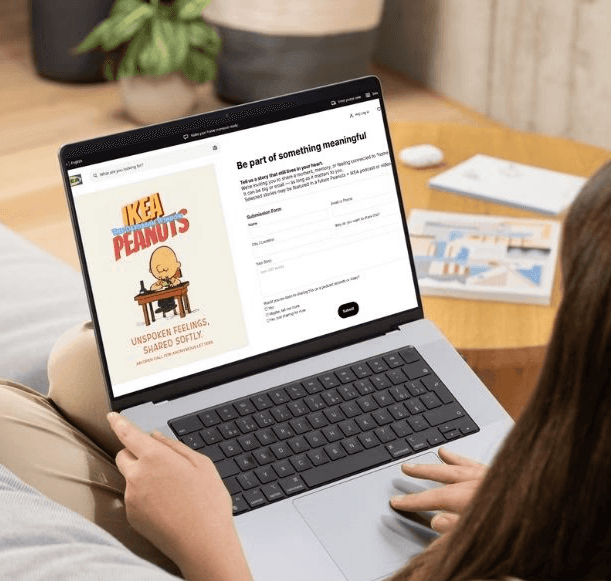
IKEA stores are full of footfall and inspiration, but IKEA wants deeper emotional engagement, not just product exploration.
Customers browse, buy, and leave.
How might IKEA collab with another brand create an emotional, human, and memorable experience that connects with real life, home life, and inner life?
Work Samples
IKEA stores are full of footfall and inspiration, but IKEA wants deeper emotional engagement — not just product exploration.
Customers browse, buy, and leave.
How might IKEA collab with another brand create an emotional, human, and memorable experience that connects with real life, home life, and inner life?
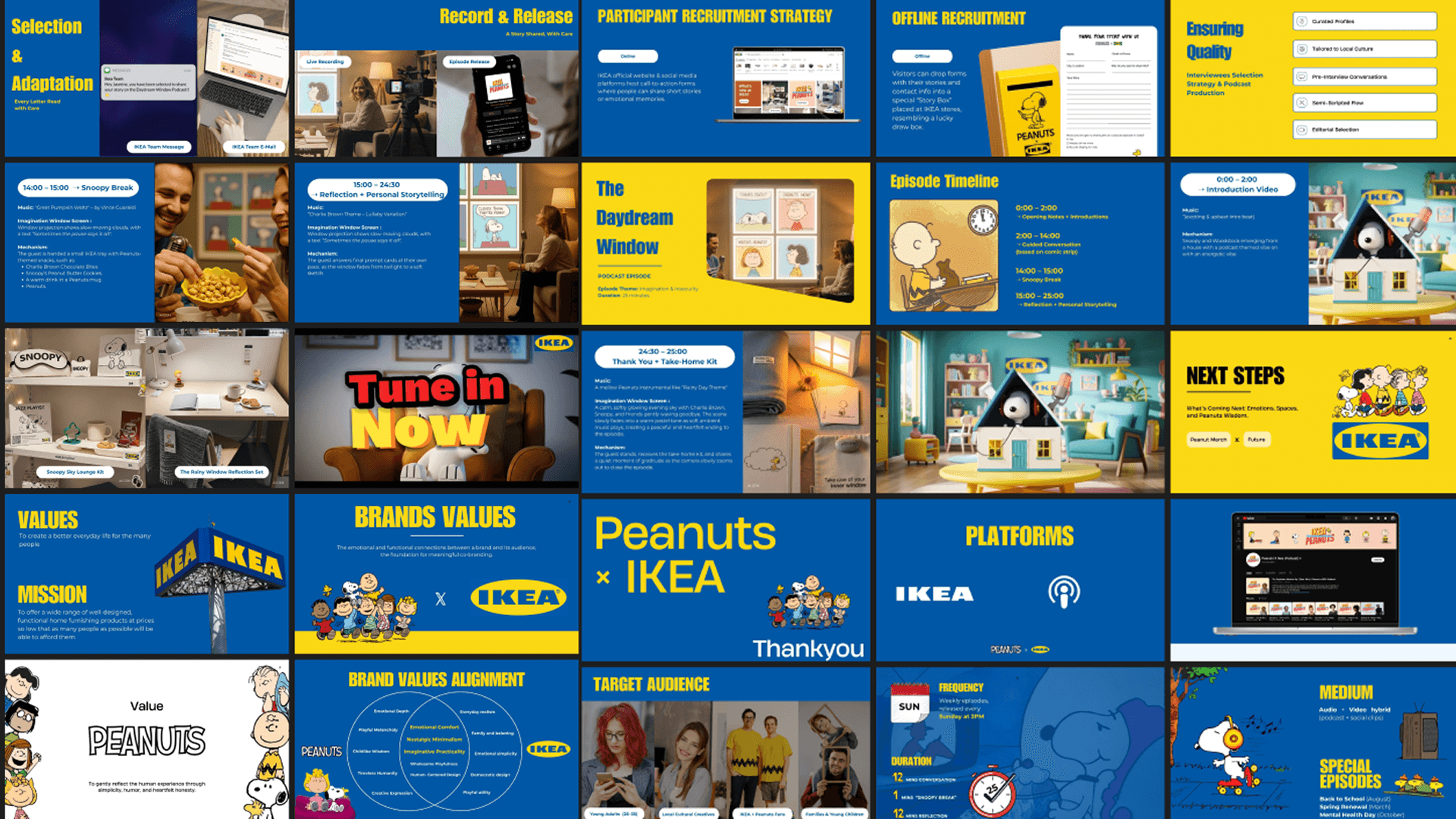
SOLUTION
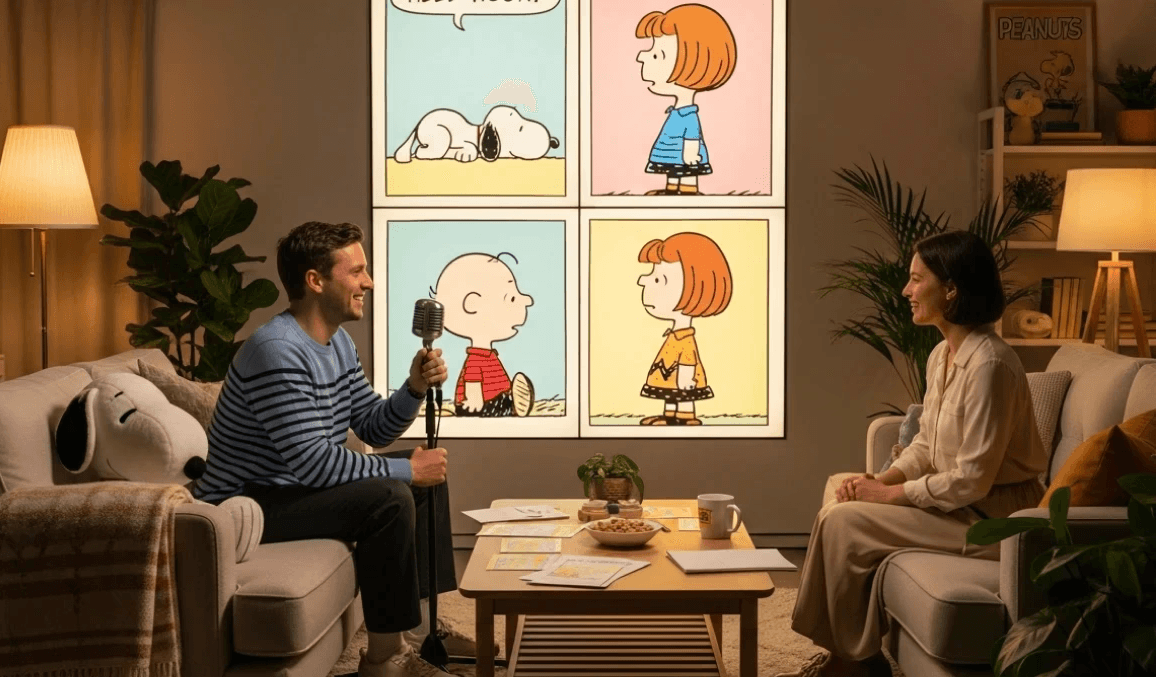
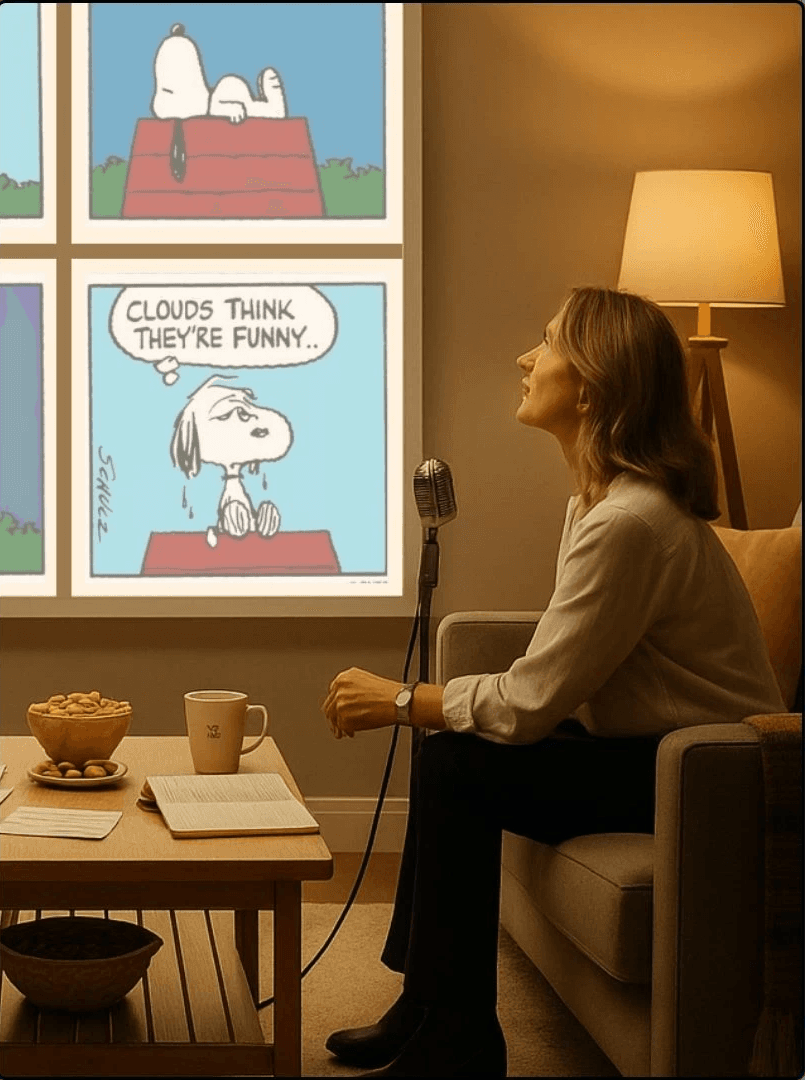
A live conversational podcast recorded inside a real IKEA room-set, featuring:
A real human interviewer dressed subtly like a Peanuts character (Linus-inspired, 34 years old)
A guest from the community
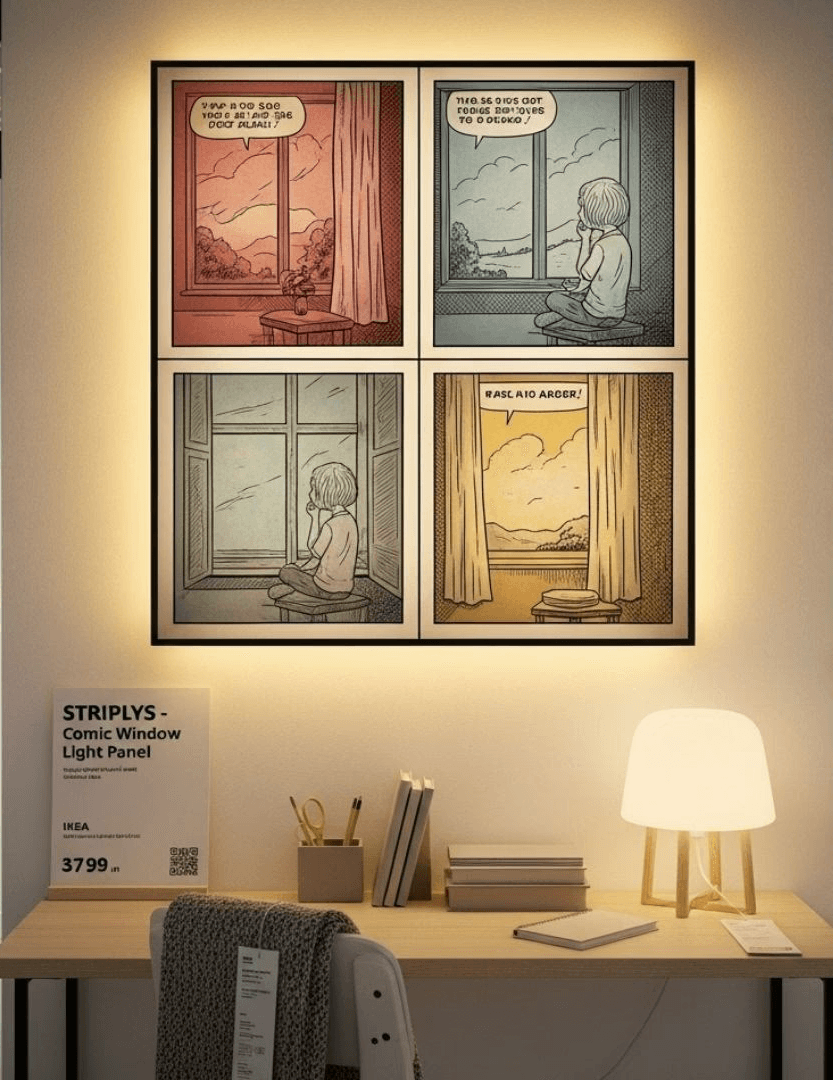
The “Striplys Window” — a 4×4 glowing LED panel that displays Peanuts comic strips, moods, memories, and visual metaphors connected to the guest’s story
The experience blends:
Emotional Comfort — the warmth of IKEA spaces
Nostalgic Minimalism — Peanuts’ timeless simplicity
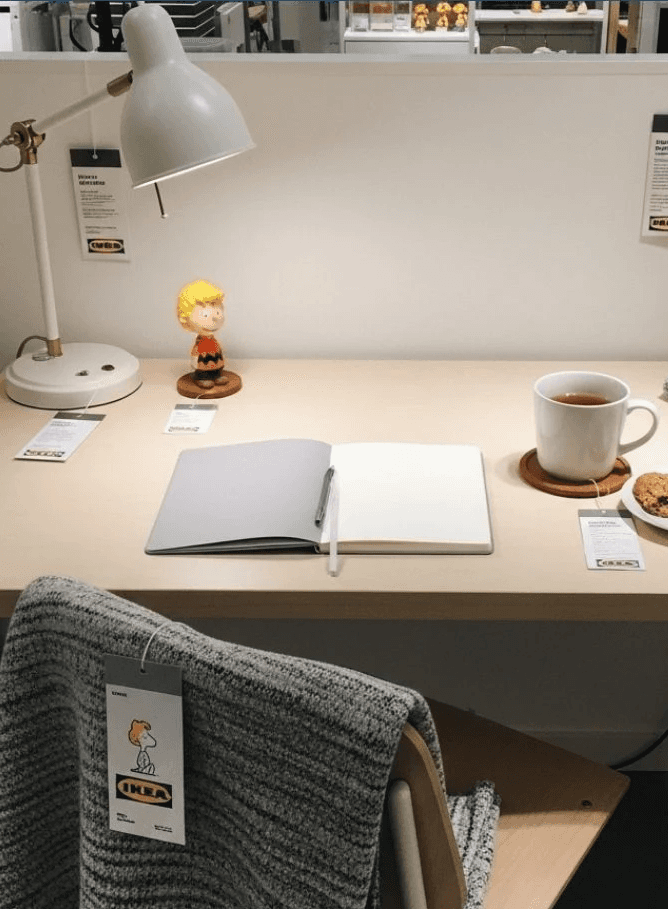
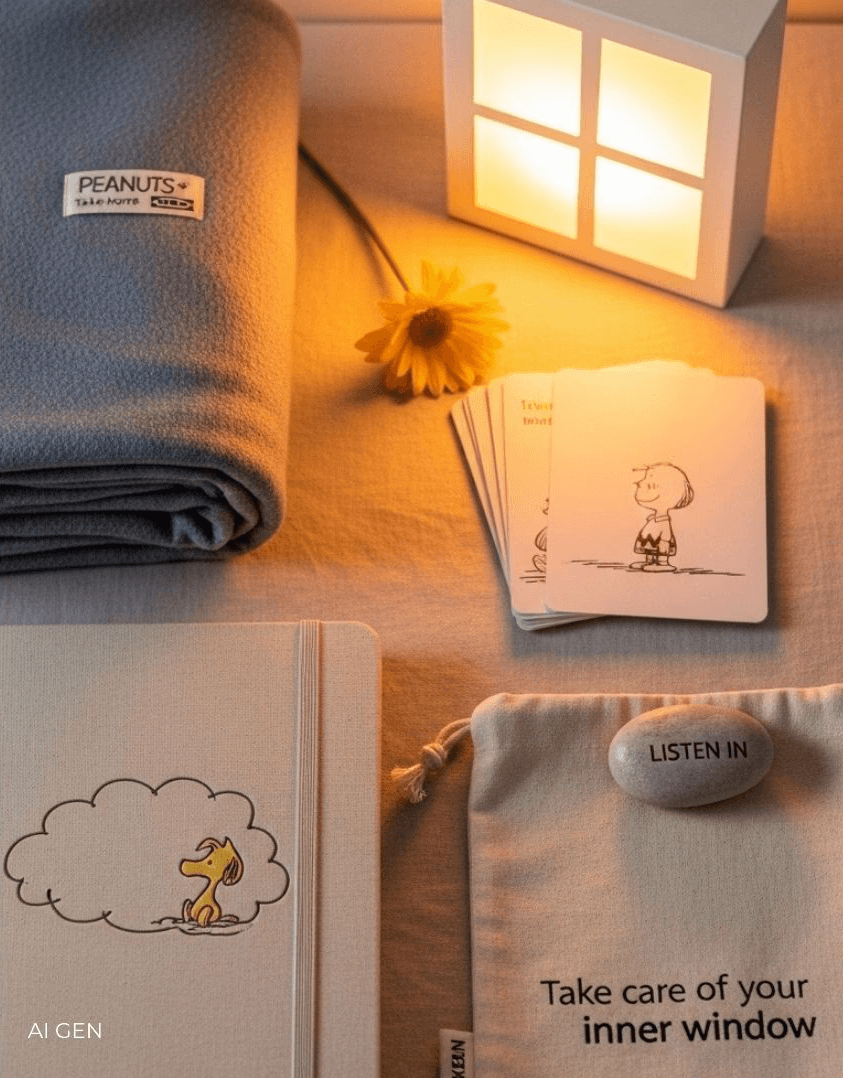
Imaginative Practicality — using IKEA products as part of the conversation
The Striplys Window becomes the emotional anchor of the show.
3.3 Podcast Structure
25 minutes per episode
Ideal for IKEA visitors, YouTube viewers, and casual podcast audiences.
Insights
Working with IKEA and Peanuts taught me how to design emotionally intelligent systems.
I learned how subtle elements can shape how safe, nostalgic, or connected users feel.
Designing for Collaboration Requires Translating Complexity
Designing for Real-World Feasibility Strengthened My Practical Mindset This helped me think like a product designer, not just a conceptual designer.
This project changed the way I think about design.
It reminded me that UX is ultimately about shaping human experience: gently, meaningfully, and with intention.
It made me more confident in designing emotion-forward experiences and integrating brand narratives with user needs.
It strengthened my belief that design can comfort people, not just serve them.
This project showed me that emotion is a functional part of UX